

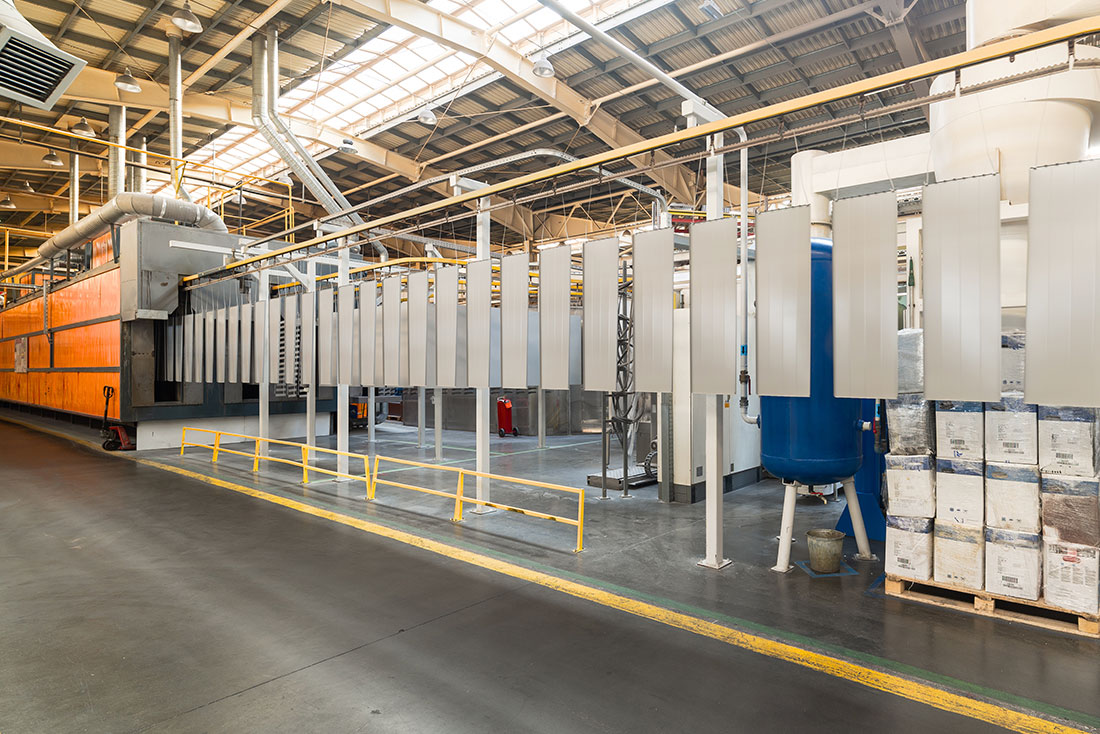
Accurate burner sizing determines how well an oven performs during daily production. Heat must rise quickly, spread evenly, and remain stable while coated parts travel through the curing zone. Engineers who design powder coating ovens calculate burner capacity carefully so powder coating finishes cure properly without wasting fuel.
Determining Total BTU Demand for Oven Chamber Volume
The starting point for burner sizing begins with oven chamber volume. Engineers calculate the total cubic footage of the curing chamber and estimate how much energy is needed to heat that space to the required cure temperature. Larger chambers inside an industrial powder coating oven require higher BTU output because more air must be heated and circulated throughout the system. Heat demand also varies with airflow rates in powder curing ovens. Recirculating air carries heat through the chamber and transfers it to coated parts as they move along the conveyor. If airflow volume increases, burner capacity must rise as well to maintain the proper temperature inside powder coating systems. These calculations help determine whether a powder coating oven for sale can handle the intended production scale.
Calculating Heat Loss Through Insulated Wall Panels
Even well-designed powder coating equipment loses some heat through its exterior surfaces. Insulated wall panels slow the transfer of energy, but heat still escapes whenever the oven interior operates at curing temperatures above the surrounding workspace.
Thermal engineers calculate this loss by analyzing insulation thickness, wall surface area, and temperature differences between the oven chamber and the facility environment. Those values reveal how much additional burner output must compensate for energy leaving the system. Proper insulation design keeps powder coating ovens efficient while maintaining stable heat levels during long production runs.
Accounting for Part Mass and Specific Heat Load
Metal parts moving through powder coating ovens absorb large amounts of heat before their surfaces reach curing temperature. Each part acts as a thermal load, and heavier steel components require more energy to heat than thin sheet metal pieces.
Specific heat values help engineers calculate the energy required to raise a part’s temperature from ambient conditions to the curing range used in powder coating. Those calculations allow designers to size burners that can handle the combined heat demand from the oven air and the coated parts themselves. Without that balance, powder coating equipment may struggle to maintain steady curing conditions.
Estimating Conveyor Speed Impact on Heat Input
Conveyor speed affects how long parts remain inside powder curing ovens. Faster conveyor movement shortens dwell time, meaning the oven must deliver more heat in a shorter period to achieve the required cure temperature.
Production engineers consider conveyor speed alongside burner capacity when designing powder coating equipment packages. Increasing burner output may compensate for faster production lines, while slower conveyors allow smaller burners to perform effectively. The relationship between speed and heat input plays a major role in determining the final configuration of powder coating systems.
Balancing Airflow Rate with Burner Output Capacity
Air circulation distributes heat throughout powder coating ovens, but moving large volumes of air also requires additional heating power. Burners must generate enough energy to maintain the target temperature even as air continuously recirculates through fans and duct systems.
Design teams analyze airflow rates carefully to ensure burner output matches the system’s ventilation demands. Excessive airflow without sufficient burner capacity can lower chamber temperatures and disrupt curing performance. Matching airflow and burner size allows powder coating equipment to maintain stable thermal conditions from entry to exit.
Factoring in Ambient Air Temperature Conditions
Environmental temperature influences burner sizing more than many operators expect. Facilities located in colder climates often require higher burner capacity because incoming air entering powder coating ovens begins at a lower temperature.
Winter conditions can increase heat demand significantly, especially in large industrial powder coating oven installations. Engineers account for the lowest expected ambient temperature when sizing burners to prevent production delays during colder months. That planning helps powder coating systems maintain reliable curing performance year-round.
Sizing Burners for Cure Temperature Uniformity
Uniform temperature across the curing chamber ensures powder coating flows evenly and bonds properly to metal surfaces. Burner size and placement both influence how evenly heat spreads throughout the oven interior.
Engineers evaluate chamber length, airflow direction, and burner positioning to prevent hot spots or cold zones. Balanced burner output allows powder curing ovens to maintain steady temperatures across the entire conveyor path. Proper sizing supports consistent coating appearance and prevents defects caused by uneven heating.
Evaluating Recovery Time After Door Openings
Loading doors introduce cooler air whenever they open during production. That sudden drop in temperature forces the burner system to restore heat quickly before the next batch of parts enters the curing zone.
Recovery time calculations measure how fast powder coating ovens return to the required temperature after each door cycle. Engineers include this factor when sizing burners to ensure the system can recover without interrupting production flow. Strong recovery performance keeps powder coating equipment operating smoothly, even during frequent loading activity.
Matching Gas Pressure Supply to Burner Rating
Burner performance depends on the available gas pressure supplied by the facility’s fuel system. Each burner operates within a specific pressure range, and insufficient gas pressure can limit its ability to reach the intended heat output.
Engineers verify that gas supply lines and regulators match the burner rating selected for the powder coating equipment. Stable gas pressure ensures consistent flame performance and reliable heat generation inside powder coating ovens. This step helps confirm that a powder coating equipment package can deliver the heating capacity required for full production.
Specialized engineering teams with experience in thermal system design often evaluate burner capacity, airflow behavior, and oven efficiency before finalizing equipment layouts. Complete powder coating systems frequently include custom powder curing ovens designed to match specific production volumes and part sizes. Industry specialists such as Reliant Finishing Systems provide engineering support and equipment solutions that help facilities operate powder coating equipment with stable curing temperatures and dependable performance.
 Lucille Wood